Christmas Lights for Small Houses: Big Impact on a Small Budget
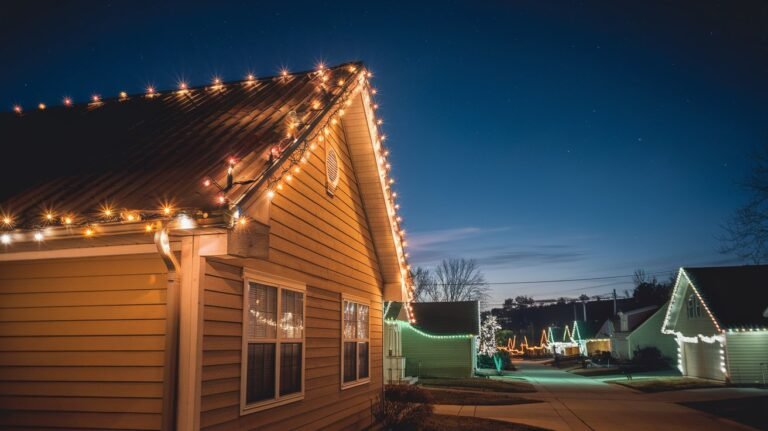
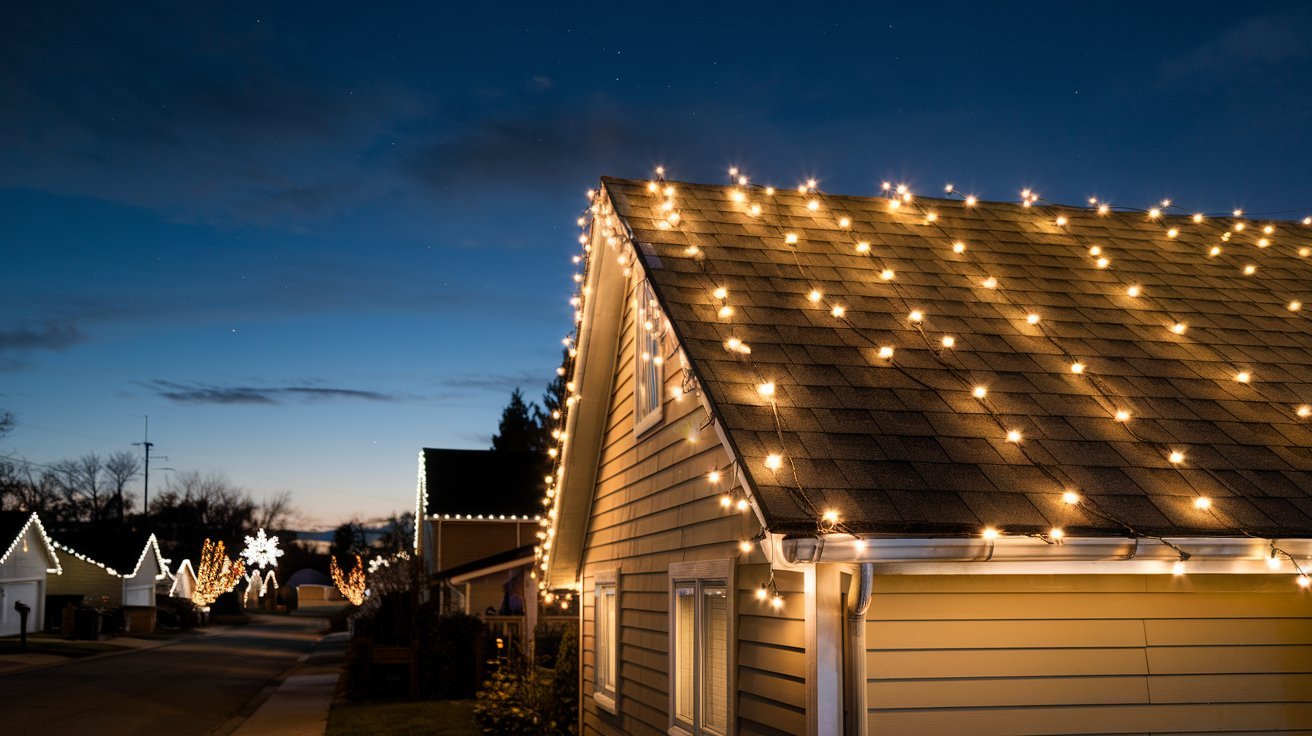
A small home does not need a huge display to stand out. Compact houses have a real advantage at night: every light you add is easy to see, the whole front of the house fits in one glance, and a few well-placed strands can look more polished than a crowded display on a mansion.
Most advice online about Christmas lights for small houses is about apartments and indoor shelves. This guide is about the outside of a real house: the roofline, front door, windows and yard. It covers what to light, what to skip, and what it should cost, so you can get a result that looks designed instead of cluttered.
Why Less Is More on a Small House
Large homes can absorb a lot of lighting and still look balanced. Small homes cannot, and that is a good thing. Three simple principles keep the look clean:
- Define the shape. Lights should trace the outline of the house so the eye sees the architecture, not a tangle of strands.
- Pick one focal point. A glowing front door or one lit tree gives guests somewhere to look.
- Stay consistent. One bulb style and one color family look intentional. A mix of old and new strands, or three different whites, looks accidental.
8 Christmas Light Ideas for Small Houses
1. Outline just the front roofline
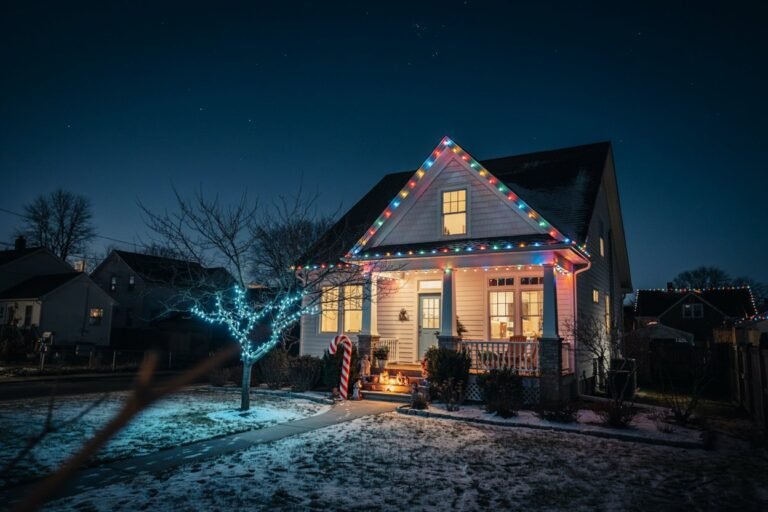
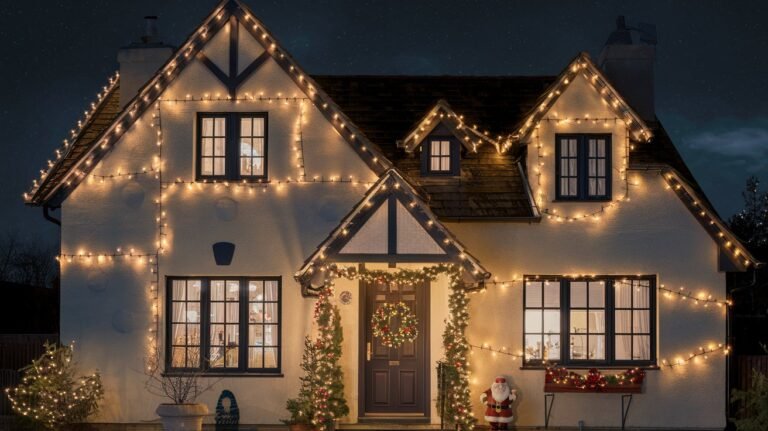
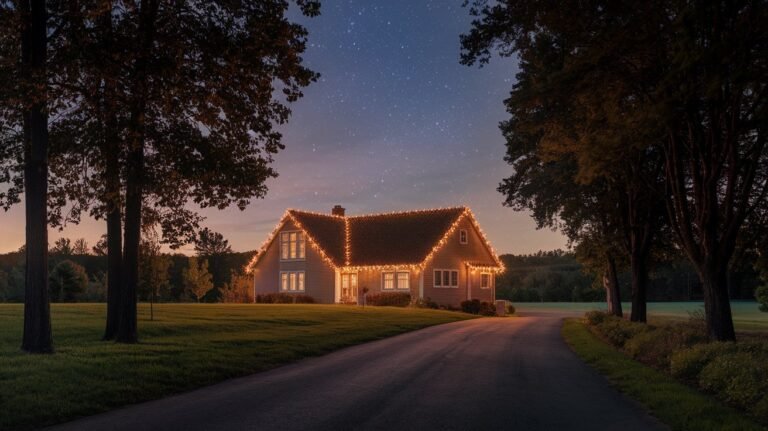
You do not have to light every edge. Lighting only the front-facing roofline and gutter gives you the biggest visual payoff for the least footage. For a small ranch or cape, that can be as little as 50 to 80 feet.
2. Frame the front door
Wrap the door frame or run a strand around the porch posts. It draws attention to the entrance and makes the whole house feel welcoming.
3. Highlight the windows
Outline the front windows with a single color of mini lights. It adds depth to the facade, and symmetrical windows look especially sharp.
4. Light one or two focal trees or shrubs
Skip the whole yard. Wrap one small tree or cover a foundation shrub with net lights. The glow adds height and color without extra cost.
5. Line the walkway and steps
Path lights or a strand along the porch steps make the approach feel finished, and they are practical on dark New England evenings.
6. Add a wreath and garland
A lit wreath on the door and a garland along the rail finish the look. A little greenery softens the rows of lights.
7. Choose warm white for a classic look
Warm white suits almost every home style, from a colonial to a farmhouse. If you want color, keep it to a simple two-tone scheme rather than the full rainbow.
8. Put everything on a timer
A timer means your display turns on at dusk and off at bedtime without you thinking about it. It keeps energy use low and saves you a trip to the outlet in the cold.
What It Costs to Light a Small House
A smaller house means fewer feet of lights, which keeps the cost down. Published per-foot ranges for professional installation run about $2.50 to $7 per linear foot with lights included, and about $2 to $5 for labor alone. Here is how that works on a typical small home:
| What you light | Approx. footage | Estimated range |
|---|---|---|
| Front roofline only | 60 ft | $150 to $420 |
| Front roofline, door and two windows | 120 ft | $300 to $840 |
| Roofline, door, windows and one wrapped tree | 160 ft | $400 to $1,120 |
These are estimates from published ranges, not North Star quotes, and rural Connecticut towns often price below big-city markets. For a closer look at how installers price jobs, read our guide to how much Christmas light installation costs in Brooklyn, CT.
How to Measure and Plan Your Display
You do not need to climb up to plan. Follow these steps from the ground:
- Pace out the front of the house. Count steps along the front edge of the roof and multiply by roughly 2.5 feet per step.
- Photograph each side at dusk. You will quickly see which areas look dark.
- Choose your focal point first. Decide whether it is the door, a tree or the roofline, then build around it.
- Count your outlets. Note where the nearest outdoor outlets are so the plan does not rely on long extension cords.
- Set a budget per feature. Roofline, door and tree can each be priced separately, which makes it easy to add or drop pieces.
Common Mistakes on Small Homes
- Too many strands. More lights do not mean a better look. Overcrowding hides the shape of your house.
- Mixed bulb types. Combining LED and incandescent strands creates uneven color. Stick to one type.
- Overloading outlets. Always follow the manufacturer’s limit for connected strands.
- Sagging lines. Loose strands look messy. Use proper clips made for gutters and shingles instead of staples or nails.
- Forgetting the takedown. Plan where the lights will be stored so they do not come out tangled next year.
DIY or Hire a Pro on a Small House?
A single-story home with an easy-to-reach roofline is the one case where DIY often works. If you do it yourself, use a sturdy ladder on level ground, have someone spot you, and avoid working on icy or wet surfaces.
Hiring a pro makes more sense if your roof is steep, your house has two stories, or you want trees and walkways lit as well. A professional also brings commercial-grade lights, clips that will not damage your gutters, and a crew that finishes in hours instead of a weekend. If you are in Windham County, our holiday light installation service in Brooklyn, CT includes design, installation, free mid-season repairs and takedown. You can request a free quote here.
For statewide pricing and add-ons such as timers, rentals and storage, see our guide to residential Christmas light installation cost in Connecticut.
Frequently Asked Questions
How many lights do I need for a small house?
That depends on footage, not square footage. A front roofline of 60 to 80 feet with a door and two windows is a common starting point. A professional can measure it exactly.
What is the cheapest way to make a small house look festive?
Light the front roofline and the front door in one color. It gives the most impact for the lowest footage.
Are LED lights worth it on a small house?
Yes, in most cases. LEDs use less electricity, run cooler and last longer than older incandescent strands, which matters when you reuse them each year.
Can I mix colors on a small house?
You can, but keep it simple. Warm white with one accent color looks tidy, while many colors can look busy on a compact facade.
When should I put lights up in Connecticut?
Most homeowners hang them after Halloween and before Thanksgiving, when the weather is milder. Professional installers book up early, so it is smart to ask for a quote in October.